Wake Up Mystery Fan
A lineup of stories worth investigating before Rian Johnson’s newest stacked-cast celebration of death and deduction, Wake Up Dead Man.
Murder is having a moment—not the act, the mystery. And you don’t need a magnifying glass to see that celebrated writer/director Rian Johnson has single-sleight-of-handedly revived the murder mystery in pop culture.
With his first film featuring long-drawl gumshoe Benoit Blanc, 2019’s Knives Out, he reminded audiences how fun and fiendishly clever a murder mystery can be when it’s packed with all the elements that made the genre so beloved—and inverted just enough to keep even the most die-hard mystery fans grasping for the next piece of the puzzle. From there, the game was afoot.
He followed up Knives Out with 2023’s Glass Onion, a candy-coated homicide on holiday that sees Blanc injected into the deadly drama of a long-standing group of friends on a remote and outlandishly decorated island. It features another of his now-signature mid-movie twists that flips the story on its head and keeps the audience one step ahead of the characters. If there’s one thing Johnson is guilty of, it’s deploying dramatic irony (to splendid effect).
And since the Blanc-aissance began, a modern era of murderous affairs has shown up at the scene. Look no further than Netflix originals Department Q and The Residence, as well as adaptations of The Thursday Murder Club and A Good Girl’s Guide to Murder. Add to that the Emmy darling Only Murders in the Building, ratings-wrecking ball High Potential, underrated Saoirse Ronan gem See How They Run, and Johnson’s own Columbo-in-a-curly-wig procedural Poker Face and you could build a pretty solid case that mystery media is having a moment—with Johnson’s fingerprints all over it.
But, of course, Johnson didn’t invent the genre, or the tropes he inverts, or the inversions he subverts in his films. He, too, needed to become a fan of mysteries to see how engrossing crime stories can be and how malleable their elements become when you follow a set of narrative footprints down a new path (or onto the ceiling).
Ahead of the upcoming release of Johnson’s third installment in the Benoit Blanc series, Wake Up Dead Man—described as a darker tale with a southern gothic spin and ruminations on life, death, and the power of religion—get yourself in the mood for methodical mischief with this array of mysterious media, many of which Johnson has cited as inspiration for his own detective-driven yarns.
So pack your pipe, break out your notepad, and follow the clues in these formative (and formula-breaking) mysteries.
The Last of Sheila (1973)
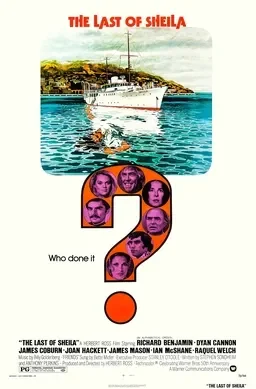
A glamorous party. A hit and run. An invitation one year later to play games aboard a lavish yacht owned by the victim’s husband. A list of suspects with secrets to spare.
Thus sets the stage for an endlessly fun, personality-packed puzzle mystery that keeps many of its masterfully crafted clues in plain sight (starting with the title). Written by powerhouse duo Steven Sondheim and Anthony Perkins—and inspired by their love of game nights and puzzles—it packs plenty of spirited dialogue (quippy and clever, like only two gay men could), shocking twists, and grand reveals.
Johnson cites this film as a heavy inspiration point for Glass Onion, and the homage runs deep. From the puzzle box invitations and the gang’s rendezvous on the pier to Dyan Cannon’s spirited turn as a bubbly PR exec being an obvious influence on Kate Hudson’s Birdie, The Last of Sheila is an influential, one-of-a-kind gem.
Of course, every twist-loving filmmaker owes a debt to the queen of the genre herself…
The Murder of Roger Ackroyd (1926)
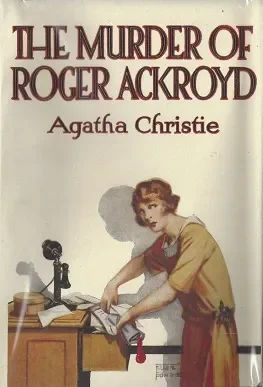
Agatha Christie is the ultimate rule-breaker. Not only did she pen some of the most beloved crime fiction ever, she also turned the genre inside out constantly, upending convention in ways that plenty of her contemporaries thought unthinkable—and unfair.
Case in point: This all-time Christie classic. The story, which follows the investigation of a wealthy businessman, puts famed detective Hercule Poirot on the case, with local doctor James Shepherd as his guide and the book’s narrator. What unfurls is a case as intensive as you’d expect, with character interviews, property sweeps, timeline alignments, and detailed deductions. It all builds and builds—until it bursts.
Normally in detective fiction, the final chapters see the investigator lay out the evidence, make a grand reveal, and make sense of all the details. Christie twists normalcy like a noose by crafting an ending no one saw coming—because it bucks the rules of “fair play” mysteries many thought were ironclad. Read along as a literary legend takes a sledgehammer to the house she helped build.
Sleuth (1972)
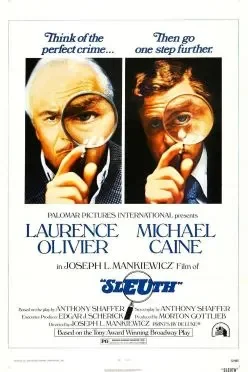
Originally a stage production, this film adaptation, which stars the great Laurence Olivier and a very young Michael Caine, is less a cat-and-mouse thriller and more a dance between two bulldogs constantly exchanging cat and mouse ears.
Picture it: Crime novelist and game aficionado Andrew Wyke (Olivier) invites hair salon owner Milo Tindle (Caine) to his estate to confront Tindle about sleeping with his wife—and to present him with a plan (a fake robbery, a big insurance payout) that would ensure mutual satisfaction. But the plan pivots, and a battle of wits emerges between two strong-willed men seemingly intent on mutually assured destruction.
It’s a parlor room of character and suspense, starting in a hedge maze and ending with a treasure hunt for some very incriminating evidence. The performances from the leads are especially stellar, which is important since they’re the only two people in the entire film.
The Hollow Man (1935)
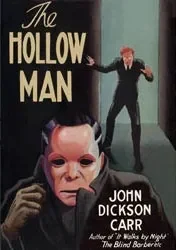
According to Johnson, Wake Up Dead Man is a “locked room” or “impossible crime” mystery, a trope that makes the setup feel seemingly, well, impossible. A corpse behind a locked door. No sign of entry. No way out. Murdered all the same.
The king of the locked room was John Dickson Carr, a prolific mystery writer of the Golden Age with a penchant for untangling impossibilities with probable cause. In a recent post-screening interview, Johnson said, “A lot of the tone of this movie was inspired by Carr, who was really taking his cues from Poe. He writes these intricate puzzles of these impossible mysteries. He’s one hell of a writer.”
To experience a dash of Carr’s brilliance, skip ahead to chapter 17 in one of Carr’s most famous works. In it, detective Gideon Fell speaks directly to the reader and breaks down the curious appeal of locked-room mysteries in stunning meta detail.
But not every great mystery requires solemn deduction. Sometimes the genre’s greatest strength is turning murder into mayhem…
Clue (1985)
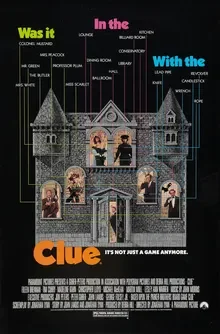
Tim Curry buttling. Madeline Kahn flaming. Christopher Lloyd creeping. Eileen Brennan screaming. Michael McKean stopping her screaming. Martin Mull declaring war. And Lesley Ann Warren hissing the s’s in “secrets” more seductively than a horny cobra.
A pure flashbang of talent, Clue brings the classic board game to life, complete with dead Boddy(s), secret passageways, and lethal weapons galore. Also like the game, the film shows multiple ways the murders could have been committed. And the most brilliant part? They all work! In the wrong hands, three successive endings could feel tedious. Here, it keeps the fun going with encore after encore of cleverness and zing.
But really, this entry is here to give you another reason to watch the brilliantly slapstick and endlessly iconic antics of a legendary cast at the top of their game. Come for the mystery; stay for the peak physical comedy and hall-of-fame line deliveries.
The Westing Game (1978)
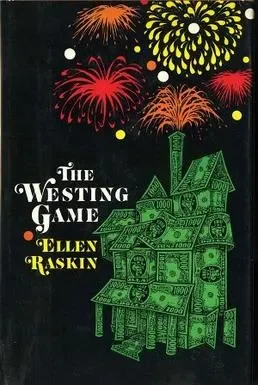
Heed this warning: Underestimate children’s literature at your own peril—especially this book. Is one of the best puzzle mysteries ever written recommended for kids in grade school? Yes. Should that surprise you? Absolutely not.
Ellen Raskin’s beloved novel, about the death of wealthy tycoon Sam Westing and the apartment building full of characters vying to solve the riddle of his will and win his vast fortune, is brilliant on multiple levels. The wordplay is witty, the cast is diverse and entertaining, the twists are unexpected (and dangerous!), and Turtle, the whip-smart young protagonist, is often the lone voice of reason among frazzled adults.
Many a young mystery fan (this writer included) was undoubtedly born thanks to its jaw-dropping finale, when all the pieces come together and you learn just how many clues have been staring back at you. Most of us have been chasing that high ever since.
Brick (2005)
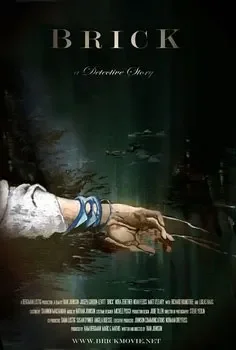
Johnson’s first screenplay and directorial debut is a study in an artist finding their voice. In the case of this film, that voice is a bit unsteady and very verbose but shows a promising young filmmaker taking the kinds of genre big-swings he’ll eventually become known for.
Combine one part 1940s noir thriller with one part John Hughes movie, shake, pour over ice, and garnish with a twist of young Joseph Gordon-Levitt. It has it all: a murdered girlfriend, opposing gangs, femme fatales, encyclopedic sidekicks, big bosses—and they’re all kids under 18.
The dialogue feels ripped from a Dick Tracy comic, the visuals from an episode of Degrassi. It’s a bold—if often disorienting—anachronism. But, more than anything, it shows Johnson’s crime-loving instincts in full force, crafting a twisted case of revenge and rivalry with classic P.I. stylings.
Twenty years ago, he took his first crack at putting his biggest influences through his own lens. He took his first stab at crafting a lovable, logical detective intent on finding the truth. And he took his necessary first step toward what will soon be the third entry in his very own series of all-time great mystery fiction.
Today, Johnson is still following his own trail of clues—and audiences seem eager to dissect whatever conclusions he uncovers next.